Seventeen years ago, on 13 February, then-Prime Minister Kevin Rudd stood in Parliament and delivered a historic National Apology to the Stolen Generations. This apology, described by Reconciliation Australia as “a watershed moment for reconciliation and truth-telling,” formally acknowledged the profound trauma and grief caused by government policies that forcibly removed Aboriginal and Torres Strait Islander children from their families.
The scale of this injustice is staggering: it is estimated that as many as one in three Indigenous children were taken from their families between 1910 and the 1970s. The trauma of this systematic separation continues to ripple through generations, affecting families and communities today. As we mark this anniversary, we invite you to deepen your understanding of our shared history through the art and stories of First Peoples artists in The Torch’s program.
The Unanswered Questions and the Search for Healing
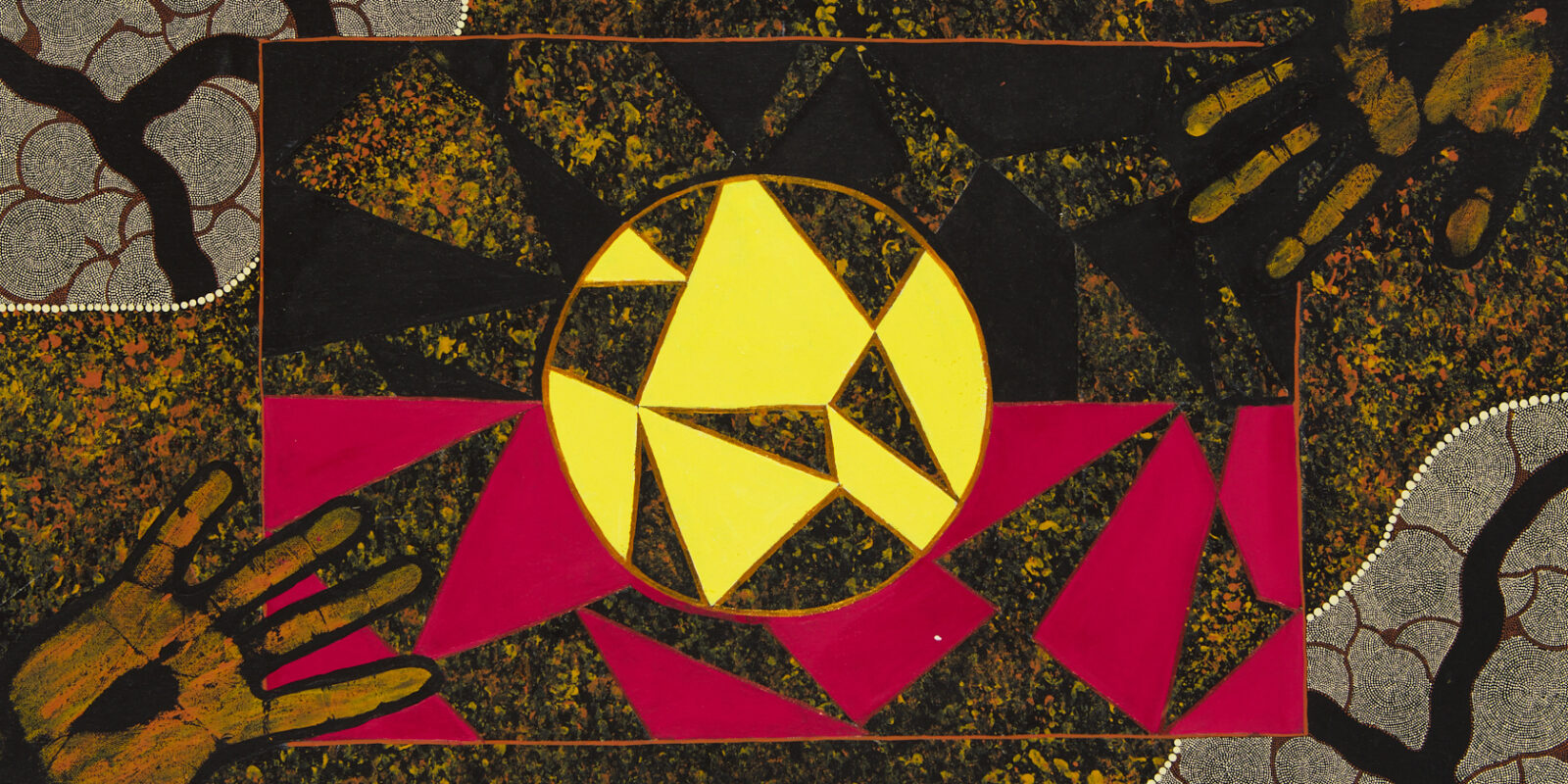
For many artists, their work grapples with deep, unresolved questions about history and identity. Latje Latje/Mutti Mutti artist Ranga, considers this collective search in his powerful artwork Missing, Torn, Broken 2024. He shares:
Does everyone understand why? Like, why are we all so broken and misplaced? Why were our families and bloodlines torn apart through the Stolen Generations? Why did the genocides of our people occur?… For many of our Mob, no amount of healing will ever change the pain and torture of our Ancestors. We will still ask why. It’s time to put our hands all in for answers, healing, and truth-telling.
This call for answers underscores the unfinished business of reconciliation. A recent Healing Foundation report found that only 6% of the recommendations from the landmark 1997 Bringing Them Home report have been fully implemented. The lack of action, as noted by Reconciliation Australia, highlights a crucial truth: “truth-telling must achieve change.”
Art as a Pathway Back to Country and Culture
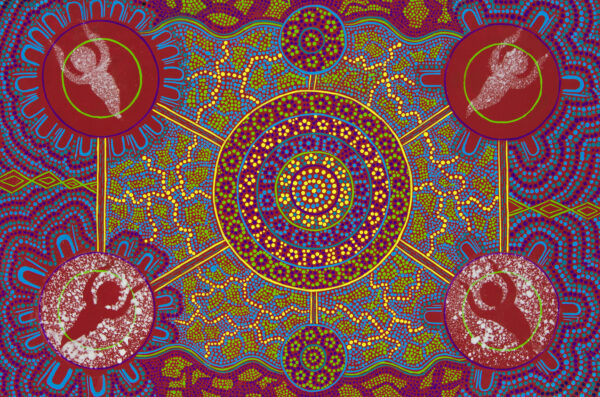
Art becomes a tool for navigating the painful journey of displacement and return. Brenton B, a Wurundjeri artist, describes his painting Spirits of Our Stolen Generations as representing:
the long and painful journey of the past and present children who were wrongly taken from their loving Mob, and then spent their lives on a heart-breaking journey finding their way back to Country.
This journey of reconnection is not just historical; it is deeply personal and ongoing. For Taungurung/Boon Wurrung/Bunurong artist Stacey Edwards, art is a direct link to ancestry and an instrument for healing. Her grandfather and his siblings were part of the Stolen Generations. Since joining The Torch program in 2017 while in prison, she has been reclaiming her cultural heritage.
My inspiration is the beautiful designs and patterns from traditional artefacts of my ancestors,” she says. “Painting diamonds is healing for me. Now I’m on a journey of healing and that comes in all forms, including art.
Her bright, concentric diamond patterns, inspired by traditional shields and clubs, are a vibrant reclamation of South East Australian Aboriginal design.
Celebrating Family and Legacy Amidst the Pain
Within the narrative of loss, art also serves to celebrate the strength and continuity of family. Stacey Edwards’ work also holds joyful, personal symbolism. In her painting Loud and Proud, she uses budgies to represent her three children:
They are loud and boisterous. They can be cheeky but are very intelligent and learn things quickly, the same way budgies do.
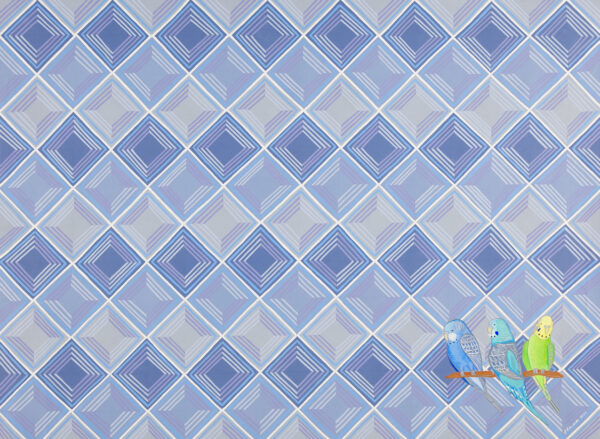
This tender depiction reminds us that despite our shared, traumatic history, we can find healing and build new stories of enduring love, resilience, and the fierce protection of future generations.
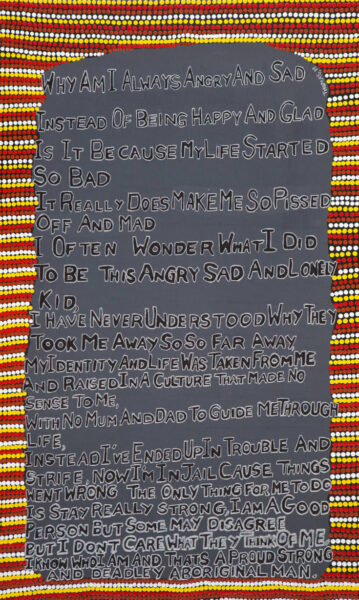
Similarly, Wotjobaluk/Gunaikurnai artist Thomas ‘Marksey’ Marks, uses poetry to encapsulate the complex reality of being “a child of the Stolen Generation, through the good times and the bad times.” These artistic expressions hold the full spectrum of human experience and refuse to be defined by suffering alone.
The Unfinished Journey and How We Can All Participate
Despite the national apology, the work is far from complete. Reconciliation Australia notes a distressing continuity: “Aboriginal and Torres Strait Islander children are still grossly over-represented at every stage of the child protection system,” making up 43.7% of children in out-of-home care in 2023. This stark statistic shows why truth-telling and action must go hand in hand.
As individuals, we can participate in this ongoing journey. You can begin by:
- Learn More: Explore the work of The Torch and the stories of the artists in our program.
- Support Healing: Consider purchasing artwork from The Torch or similar organisations. When you buy an artist’s work, you are directly supporting their economic empowerment and cultural practice, validating their story and contributing to their journey of healing. The Torch does not take a commission which means 100% of the artwork price goes directly to First Peoples artists.
- Listen Deeply: Reflect on the artworks and let the stories, questions and poetry of Ranga, Brenton B, Stacey Edwards, and Thomas ‘Marksey’ Marks deepen your understanding of what this anniversary truly means.
The anniversary of the National Apology is not just a date to remember a speech. It is a time to listen to the voices that have been silenced for too long, to support the healing that is actively happening through platforms like The Torch, and to recognise our shared responsibility in a journey of reconciliation that demands both remembrance and action.